Steps in conducting research
Research is often conducted using the hourglass model structure of research.
[7]
The hourglass model starts with a broad spectrum for research, focusing
in on the required information through the method of the project (like
the neck of the hourglass), then expands the research in the form of
discussion and results. The major steps in conducting research are:
[8]
- Identification of research problem
- Literature review
- Specifying the purpose of research
- Determine specific research questions
- Specification of a Conceptual framework - Usually a set of hypotheses [9]
- Choice of a methodology (for data collection)
- Data collection
- Analyzing and interpreting the data
- Reporting and evaluating research
- Communicating the research findings and, possibly, recommendations
The steps generally represent the overall process, however they
should be viewed as an ever-changing iterative process rather than a
fixed set of steps.
[10] Most research begins with a general statement of the problem, or rather, the purpose for engaging in the study.
[11] The literature review identifies flaws or holes in previous research which provides justification for the study. Often, a
literature review
is conducted in a given subject area before a research question is
identified. A gap in the current literature, as identified by a
researcher, then engenders a research question. The research question
may be parallel to the
hypothesis.
The hypothesis is the supposition to be tested. The researcher(s)
collects data to test the hypothesis. The researcher(s) then analyzes
and interprets the data via a variety of statistical methods, engaging
in what is known as
Empirical research. The results of the data analysis in confirming or failing to reject the
Null hypothesis
are then reported and evaluated. At the end, the researcher may discuss
avenues for further research. However, some researchers advocate for
the flip approach: starting with articulating findings and discussion of
them, moving "up" to identification research problem that emerging in
the findings and literature review introducing the findings. The flip
approach is justified by the transactional nature of the research
endeavor where research inquiry, research questions, research method,
relevant research literature, and so on are not fully known until the
findings fully emerged and interpreted.
Rudolph Rummel
says, "... no researcher should accept any one or two tests as
definitive. It is only when a range of tests are consistent over many
kinds of data, researchers, and methods can one have confidence in the
results."
[12]
Plato in
Meno
talks about an inherent difficulty, if not a paradox, of doing research
that can be paraphrase in the following way, "If you know what you're
searching for, why do you search for it?! [i.e., you have already found
it] If you don't know what you're searching for, what are you searching
for?!"
[13]

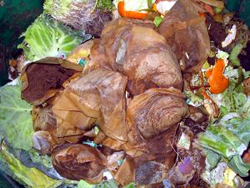 Microbes also play a key role in the nitrogen cycle. Bacteria in the
soil convert atmospheric nitrogen into nitrates in the soil. Nitrates
are an essential plant nutrient – they need the nitrogen for proteins -
and the plants themselves provide food for live stock and other animals.
The nitrogen locked in plant and animal proteins is then degraded into
nitrates by microbes and eventually converted back into nitrogen by
denitrifying bacteria. Compost heaps are a fantastic example of how
effectively microbes breakdown organic matter. The mixture of garden
weed, grass clippings and mouldy fruit and veg is decomposed rapidly by
fungi and bacteria into carbon dioxide and plant compost containing
nourishing nitrates and nitrites. Without the recycling power of
microbes dead vegetation, carcasses and food waste would start piling up
around us! In the UK 6.7 million tonnes of food waste is thrown away
every year. Imagine what would happen to the Earth if this waste just
sat there and wasn’t degraded…
Microbes also play a key role in the nitrogen cycle. Bacteria in the
soil convert atmospheric nitrogen into nitrates in the soil. Nitrates
are an essential plant nutrient – they need the nitrogen for proteins -
and the plants themselves provide food for live stock and other animals.
The nitrogen locked in plant and animal proteins is then degraded into
nitrates by microbes and eventually converted back into nitrogen by
denitrifying bacteria. Compost heaps are a fantastic example of how
effectively microbes breakdown organic matter. The mixture of garden
weed, grass clippings and mouldy fruit and veg is decomposed rapidly by
fungi and bacteria into carbon dioxide and plant compost containing
nourishing nitrates and nitrites. Without the recycling power of
microbes dead vegetation, carcasses and food waste would start piling up
around us! In the UK 6.7 million tonnes of food waste is thrown away
every year. Imagine what would happen to the Earth if this waste just
sat there and wasn’t degraded…


